Smart Home - IoT Management Platform

Smart Home -
IoT Platform

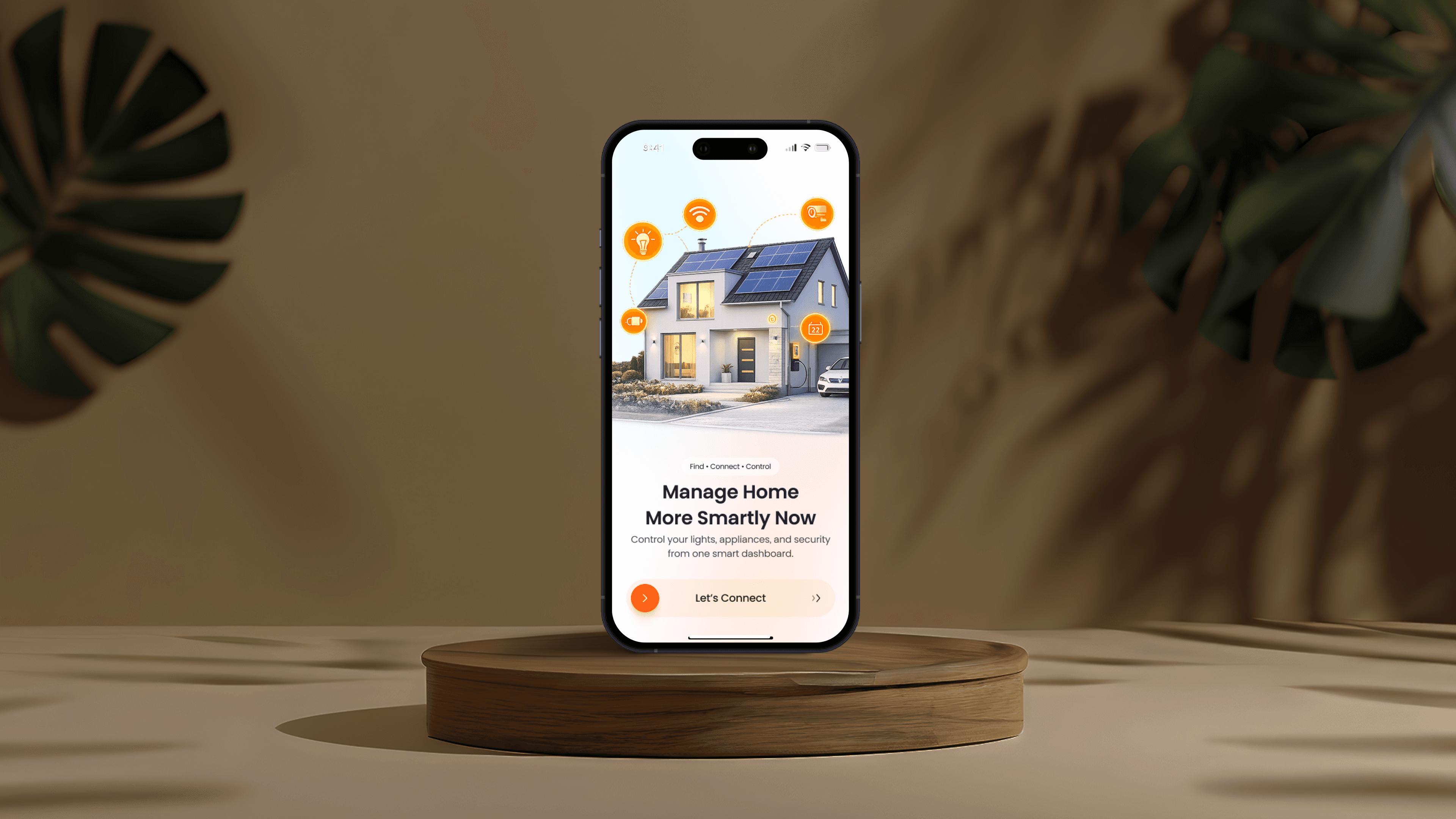
The Smart Home App is a self-initiated conceptual project exploring the UX/UI challenges of modern IoT platforms. Developed as a personal exploration into complex system architectures, the concept focuses on creating a unified, highly intuitive control interface for connected living spaces, free from the constraints of legacy systems.
Industry

IoT & Consumer Tech

Role

Solo Product Designer

Duration

3 Weeks

Focus

UX/UI Design & System Architecture

Project Type

Concept Design / Self-Initiated

Challenge

Challenge

The primary objective of this conceptual study was to tackle the inherent UX complexities of smart ecosystems. The challenge lay in consolidating diverse devices (lighting, security, climate) into a single, cohesive dashboard without causing cognitive overload. It required exploring how to simplify advanced automation logic for everyday users and establishing a flexible design system capable of handling multi-state environments.

Designing the tabii VOD platform from scratch required building a unified user experience across a fragmented ecosystem of Mobile, Web, Tablets, and Smart TVs. A major technical hurdle was creating a scalable design system that adapts touch-based mobile interactions into D-pad navigation for 10-foot TV interfaces. Additionally, a complex content library (Live TV, series, Kids) had to be architected from the ground up, requiring a discovery experience designed to minimize decision fatigue and endless scrolling. Finally, ensuring a seamless cross-device journey—such as a consistent “continue watching” handoff—was essential for user retention.

Results

Results

The exploration resulted in a comprehensive, modular UI Kit and a streamlined information architecture. By translating complex technical requirements into a clean, card-based interface, the concept successfully demonstrates how intuitive visual hierarchies can improve user interactions in IoT. This exercise significantly deepened expertise in designing for dynamic data visualization and complex rule-based automations.

The exploration resulted in a comprehensive, modular UI Kit and a streamlined information architecture. By translating complex technical requirements into a clean, card-based interface, the concept successfully demonstrates how intuitive visual hierarchies can improve user interactions in IoT. This exercise significantly deepened expertise in designing for dynamic data visualization and complex rule-based automations.

Design Approach

This Smart Home App prioritized clarity, minimalism, and accessibility. A clean visual language was established to ensure that interactive elements and real-time data visualizations stand out effortlessly against the background. Using structured card-based layouts and distinct iconography, the interface maintains consistency across all screens, allowing users to navigate through rooms, devices, and complex automation rules with absolute cognitive ease.

Features

Intuitive Automation Builder

A step-by-step automation builder simplifies complex IoT routines into easy, guided interactions, allowing users to effortlessly set triggers, schedules, and device rules.

Frictionless Onboarding & Pairing

A streamlined registration and verification flow seamlessly transitions into an intuitive device discovery radar, allowing users to safely connect their smart home appliances in seconds.

Device Control

Easily filter connected home appliances and access intuitive detail panels to precisely adjust lighting, color temperatures, and device timers.

Page Variations

Conclusion

Ultimately, this concept project served as a rigorous exercise in problem-solving within heavily technical domains. It highlights the ability to independently research, architect, and design a scalable digital ecosystem from scratch. The resulting conceptual platform not only meets modern aesthetic standards but also proves the critical role of cognitive simplicity in smart home technology.