Edugo.ai | AI-Powered Language Learning Platform
Contributed to the UX/UI improvement of Edugo.ai — an AI-powered language learning platform serving teachers, students, and administrators. Worked on enhancing dashboard experiences, onboarding flows, and interactive quiz interfaces within a multi-role ecosystem.
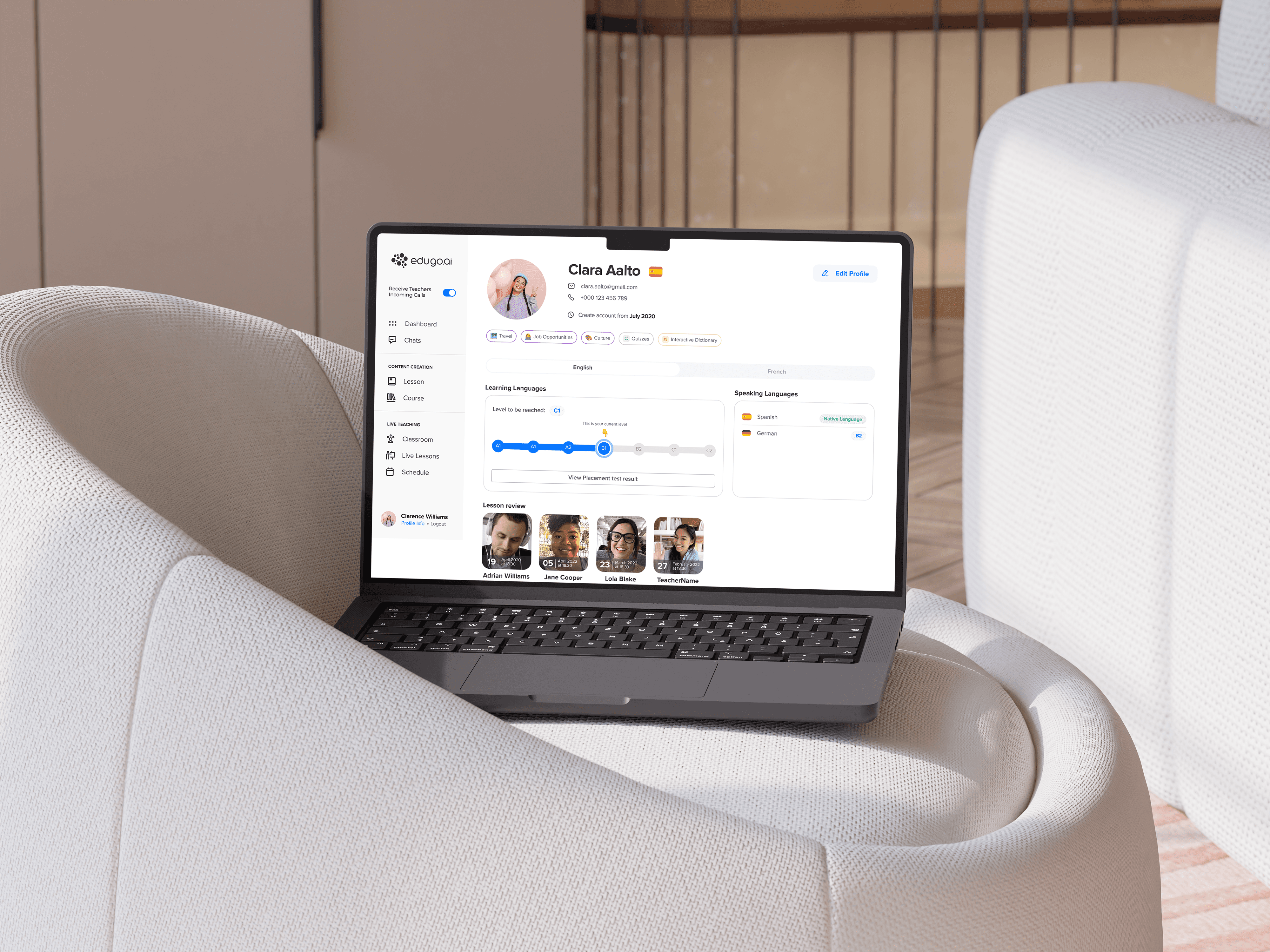
Ed Tech / AI
3 months
Dashboard Design & Gamification
11-50
Challenge
The platform serves three distinct user roles — students, teachers, and administrators — with deeply interconnected interfaces. A change on the student side could directly impact the teacher and admin experience, requiring every design decision to be evaluated across the entire ecosystem. With a younger-skewing core audience, gamification was also a key factor in keeping engagement high throughout the learning journey.
Results
Targeted UI enhancements were delivered across student, teacher, and admin dashboards — improving visual hierarchy and usability. Onboarding flows were refined to reduce friction, and interactive quiz interfaces were improved with gamification elements to better engage the platform's younger audience. A cross-role design perspective was maintained throughout, ensuring consistency across all user types.
+50%
Learners engagement
5x
Faster course creation
200+
AI-powered learning activities
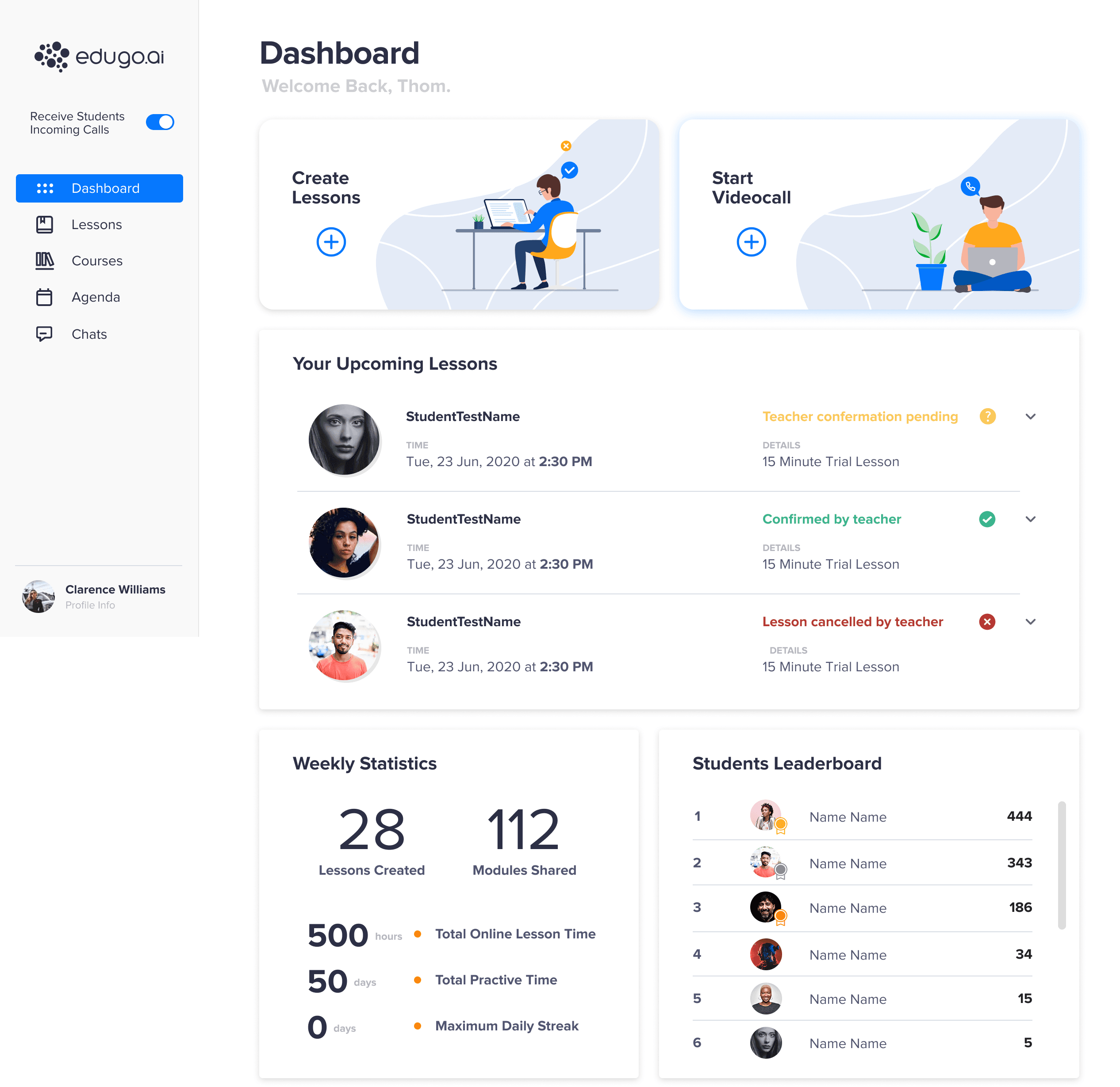
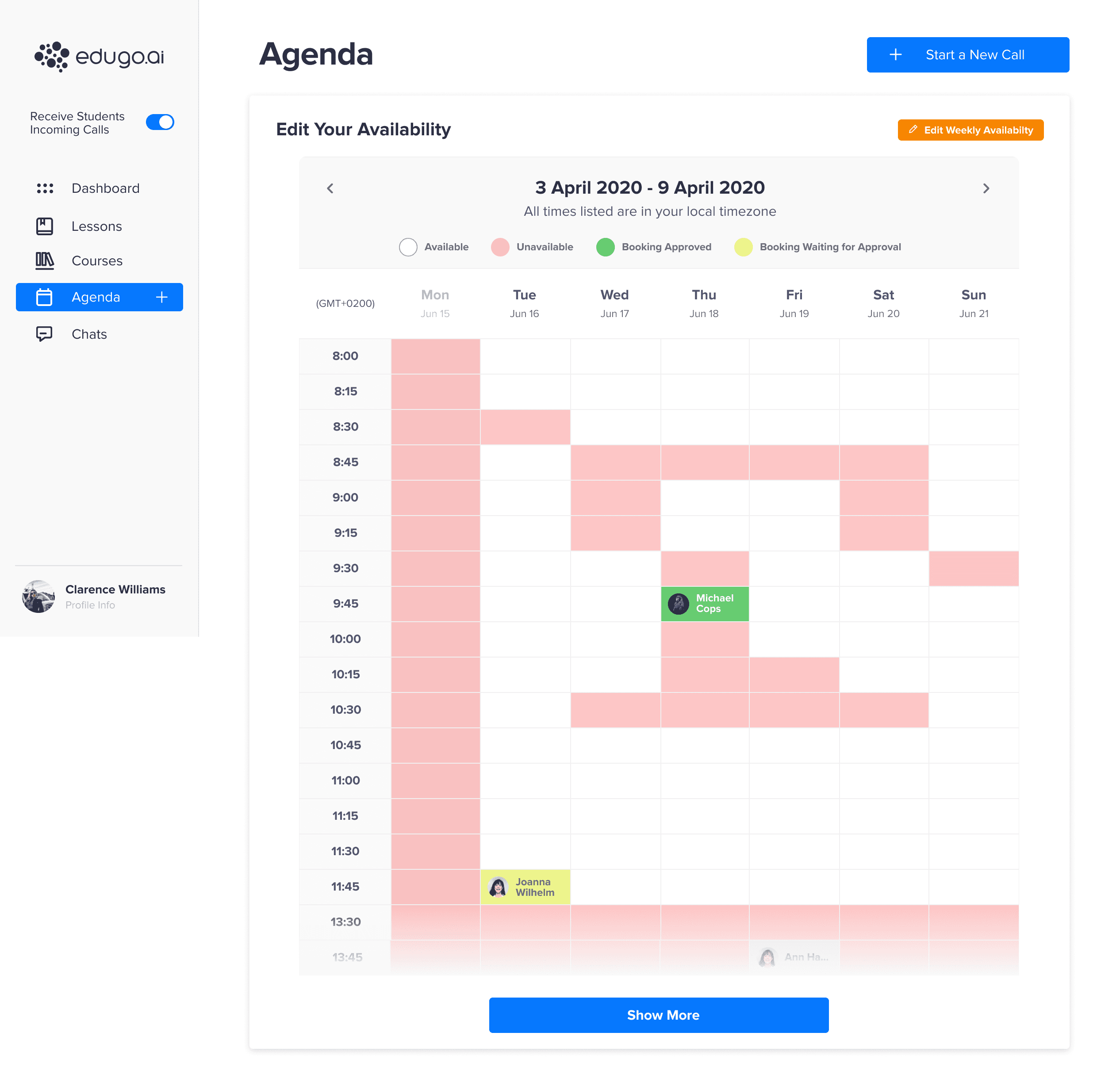
A centralized hub featuring upcoming lessons, weekly statistics, and a student leaderboard — blending operational clarity with gamification. A weekly calendar view for managing availability, tracking bookings, and overseeing upcoming lessons at a glance.
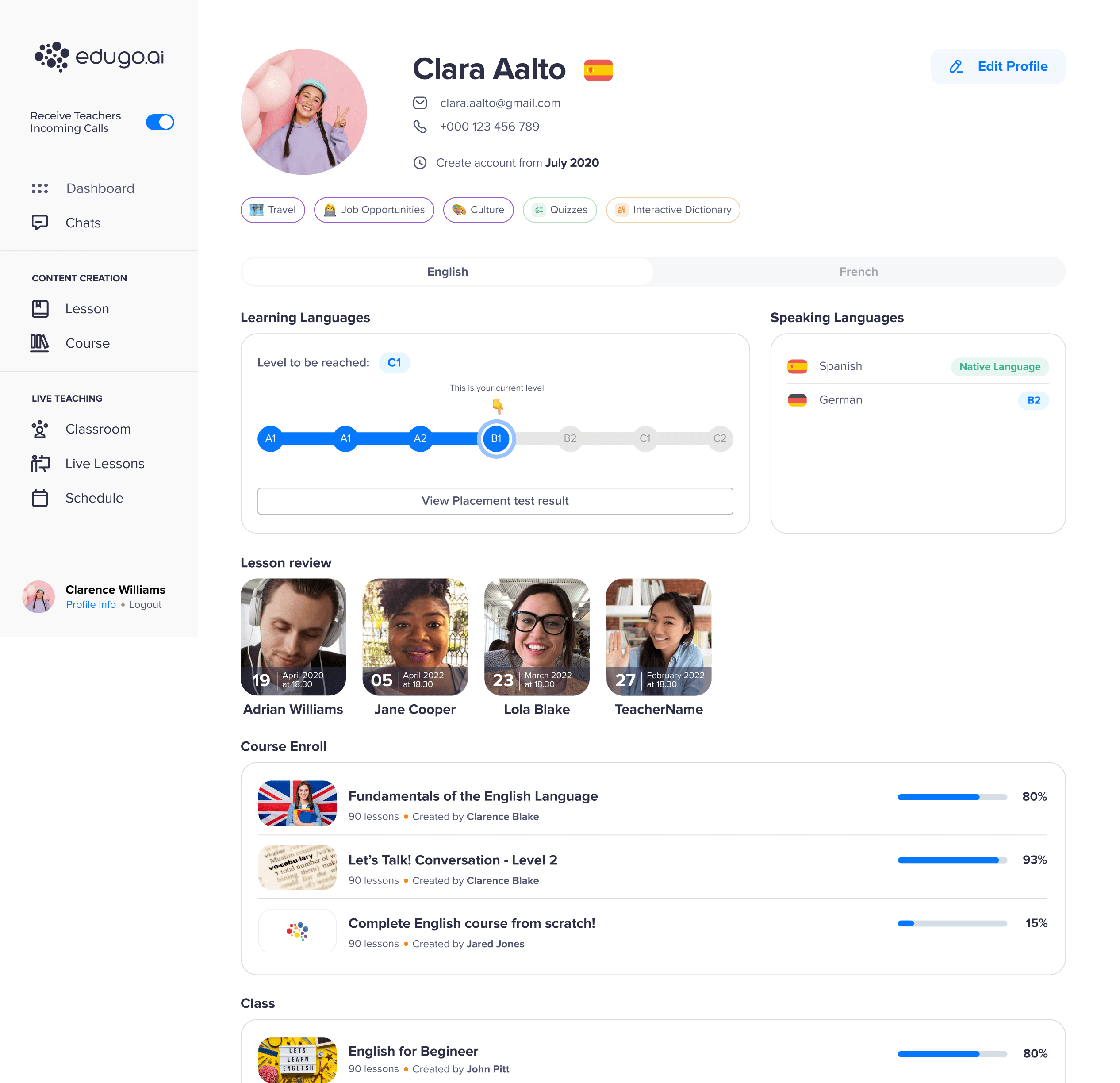
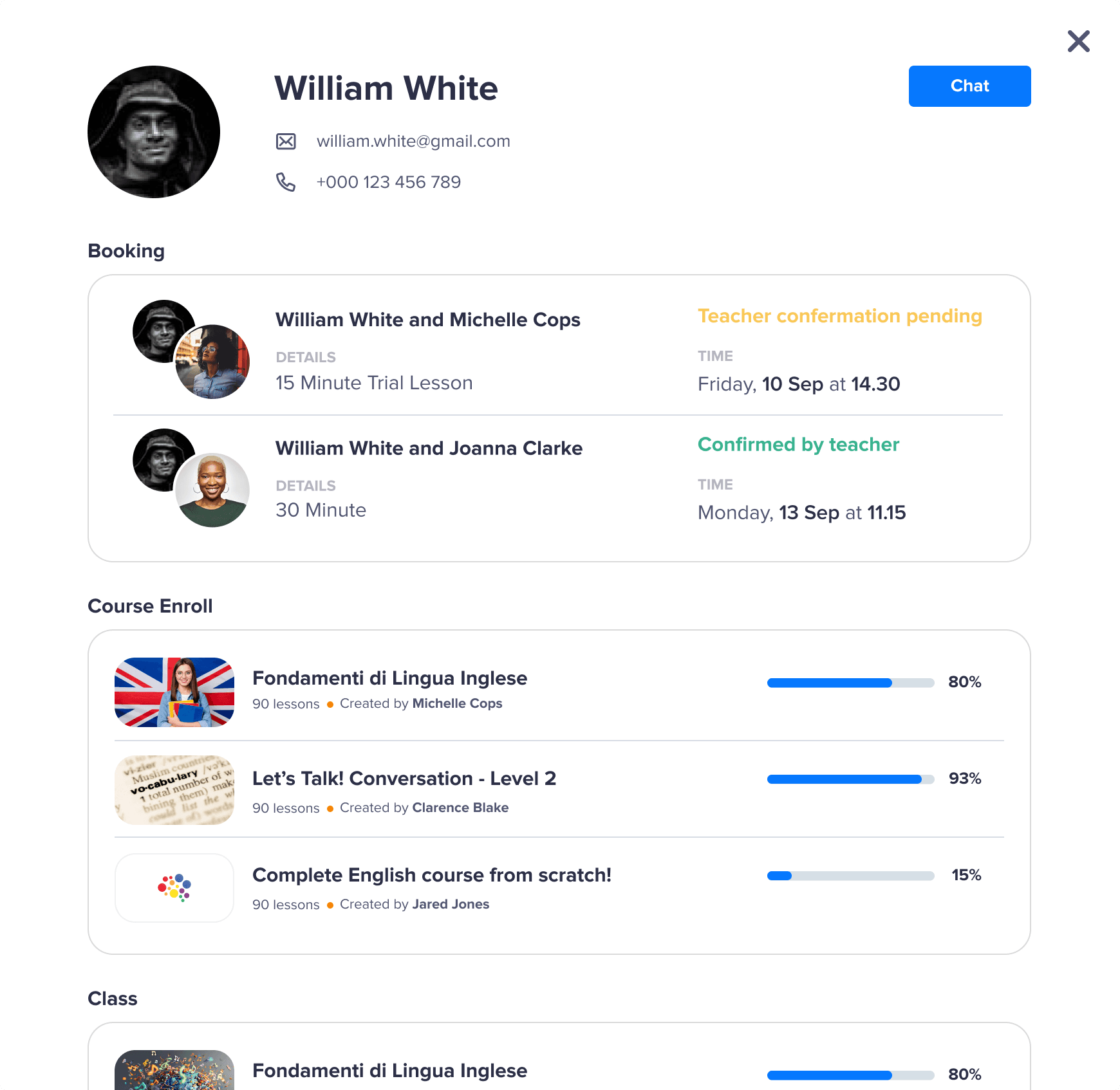
A comprehensive learner view displaying language progress, enrolled courses, lesson history, and learning goals — giving students a clear sense of their journey at a glance.
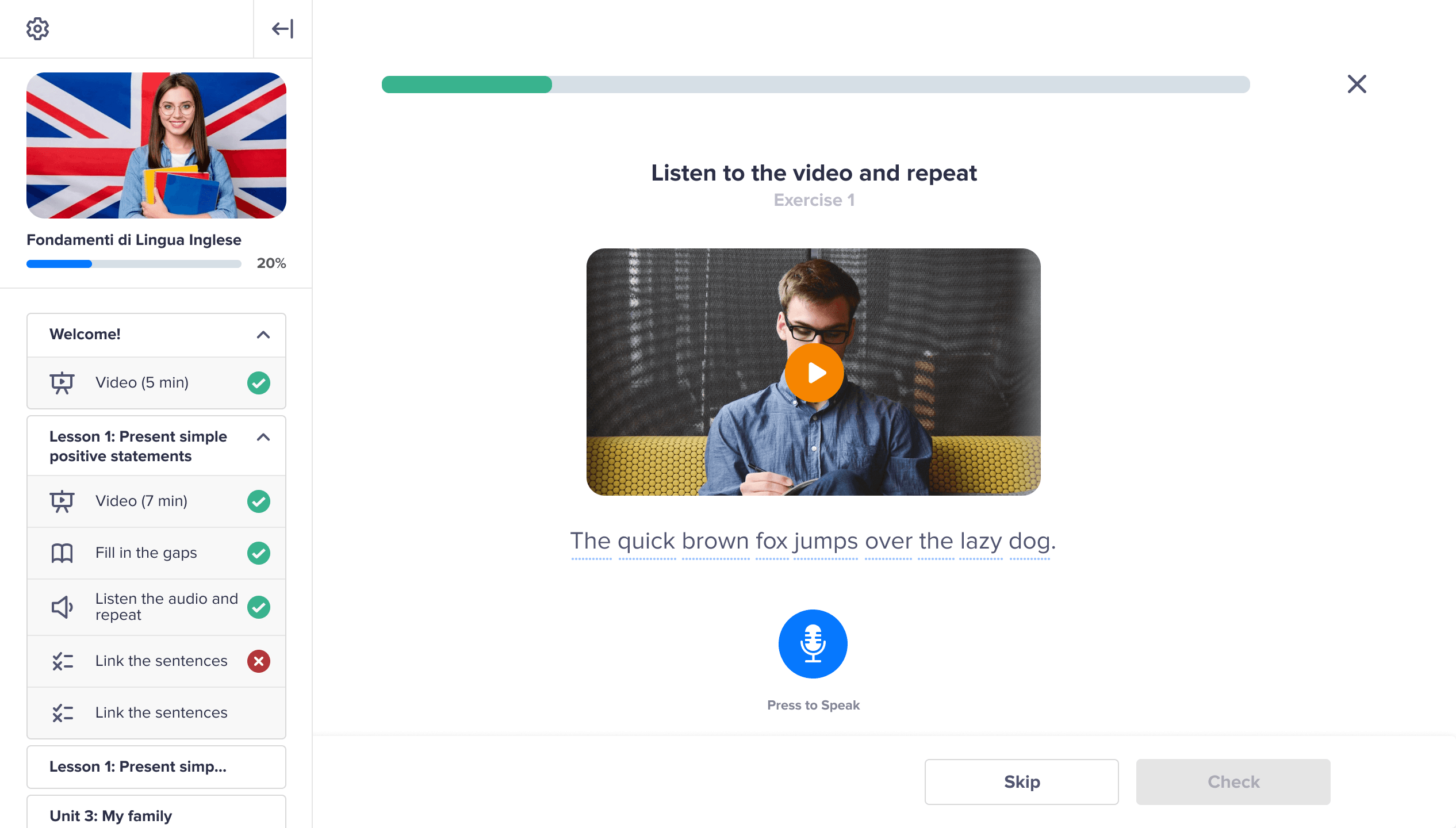
Gamified assessment experiences including listen-and-repeat, word matching, dictation, and multiple-choice exercises — designed to feel engaging rather than evaluative, with real-time feedback and level determination.
Conclusion
Working within a multi-role EdTech platform highlighted the importance of systems thinking in design — where every improvement needs to be considered not in isolation, but as part of an interconnected ecosystem. The short but intensive engagement reinforced how impactful targeted, well-considered enhancements can be, even without a full redesign. Designing for a younger audience within an AI-powered learning environment also deepened my understanding of how gamification and progressive disclosure can drive engagement in educational products.