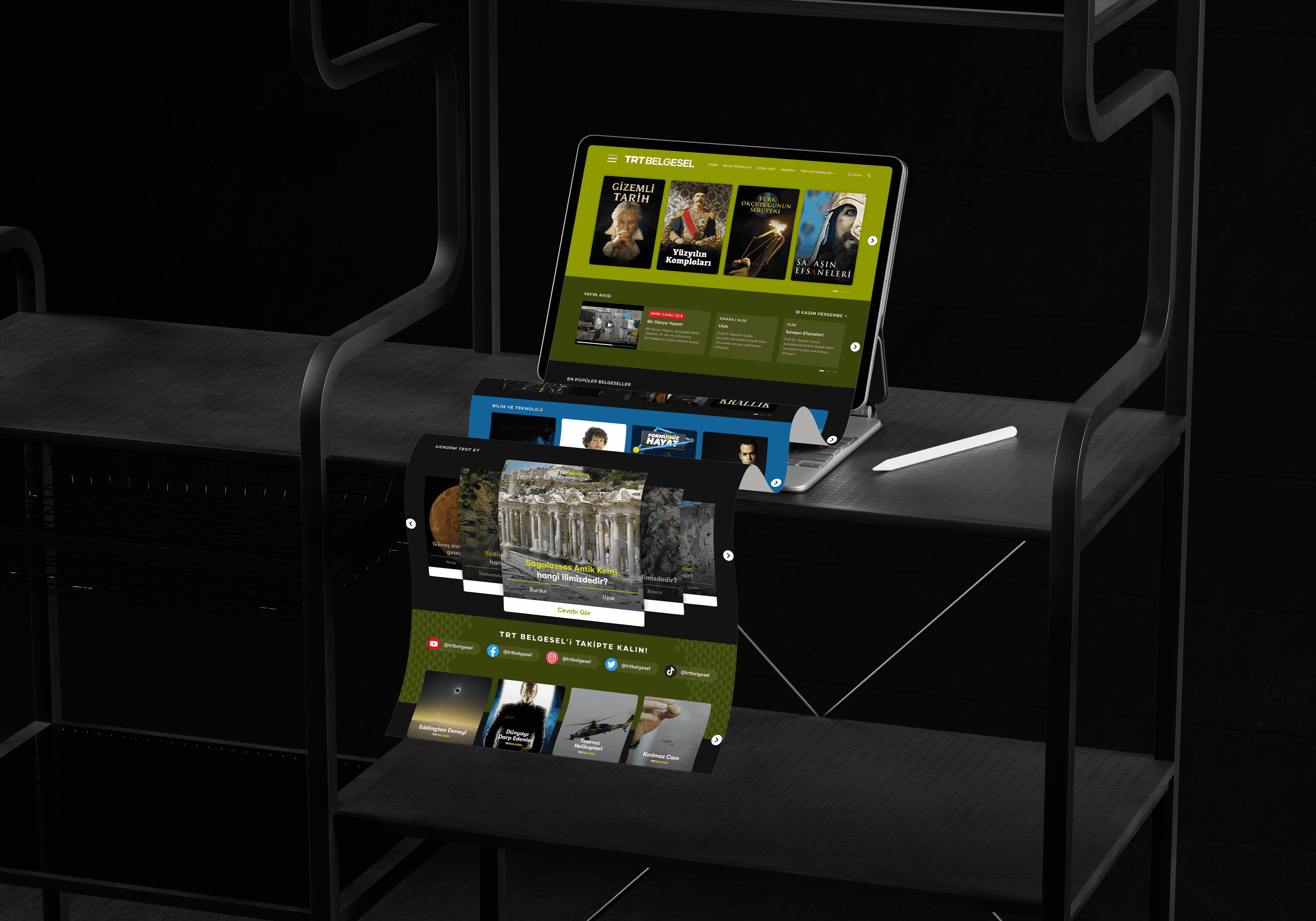
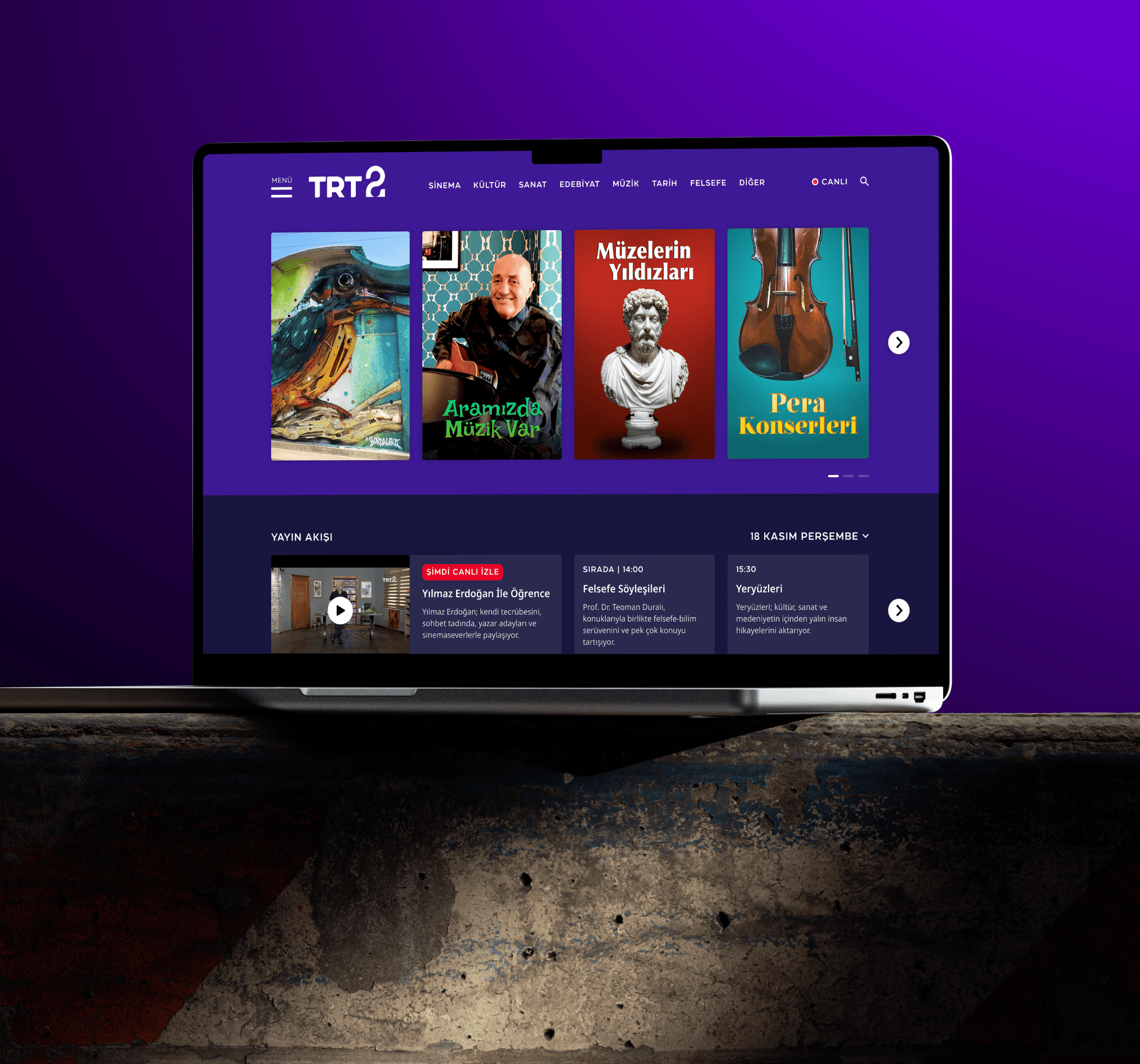
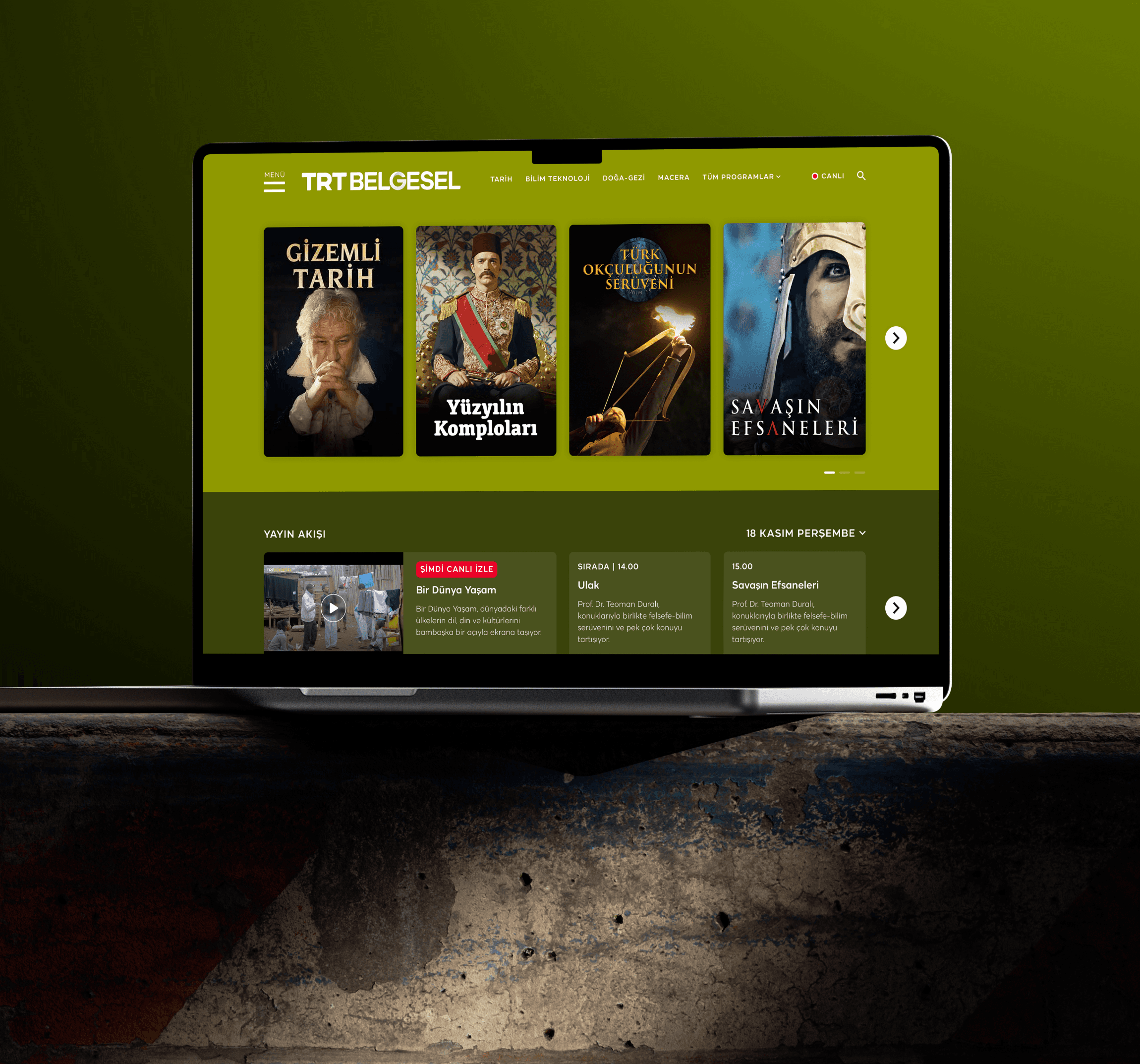
This project was focused on creating a unified digital language for TRT 2 and TRT Belgesel, ensuring a cohesive experience across both platforms. A modern and streamlined interface was developed to transform traditional broadcast structures into a contemporary digital environment. While shared components were utilized to maintain structural consistency, the unique branding and essence of each channel were meticulously preserved through specialized color palettes.
Media
2 months
Responsive Systems & Brand Unification
Concept Design
Challenge
A unified visual language was developed for TRT 2 and TRT Belgesel to harmonize their distinct brand identities—artistic versus exploratory—within a single UI framework. The modernization of traditional broadcast layouts into a premium, streaming-inspired experience was prioritized, ensuring that shared components could scale across diverse content types without losing unique visual essence of each channel.
Results
A scalable library of shared components was delivered, utilizing strategic color coding to maintain brand distinction while ensuring visual consistency across both platforms. An optimized information hierarchy was implemented to improve content scannability, resulting in a modern and responsive interface. By bridging the gap between traditional TV and contemporary digital standards, a seamless user journey was achieved across all screen sizes.
2 Brands
Unified under 1 Design System
100%
Visual Consistency Achieved
Mobile-First
Fully Responsive Architecture
Research & Analysis: The existing digital interfaces of TRT 2 and TRT Belgesel were analyzed. Structural similarities and user needs were identified to establish a common ground for the new design.
Information Architecture: A streamlined navigation and content hierarchy was developed. The layout was restructured to accommodate diverse program types, from documentaries to art shows, without overwhelming the user.
Component Design: A master UI kit was constructed. Reusable components such as content cards, sliders, and navigation bars were designed to dynamically adapt to the distinct color palettes of both channels.
Visual Design: A dark-mode aesthetic was applied to evoke a premium, modern streaming platform feel. Visual harmony was ensured while keeping the unique "soul" of each brand intact.
Prototyping: High-fidelity, responsive prototypes were built. The user flow was tested across different screen sizes to guarantee a seamless, mobile-first experience.
A mobile-first approach was prioritized to ensure a seamless and intuitive user journey across smaller screens. The dense content hierarchy, including live broadcast streams and extensive program catalogs, was meticulously adapted for touch interactions. A fluid and highly responsive layout was established, allowing the premium, streaming-inspired aesthetic to be fully preserved on mobile devices without compromising accessibility or visual quality.
Conclusion
This concept design demonstrates that two distinct broadcast channels can share a single, scalable digital architecture without losing their unique brand identities. By utilizing a unified component library and strategic color coding, a modern, user-centric, and visually rich digital environment was established. The final outcome successfully bridges the gap between traditional television layouts and contemporary streaming platforms, delivering a premium experience across all devices.